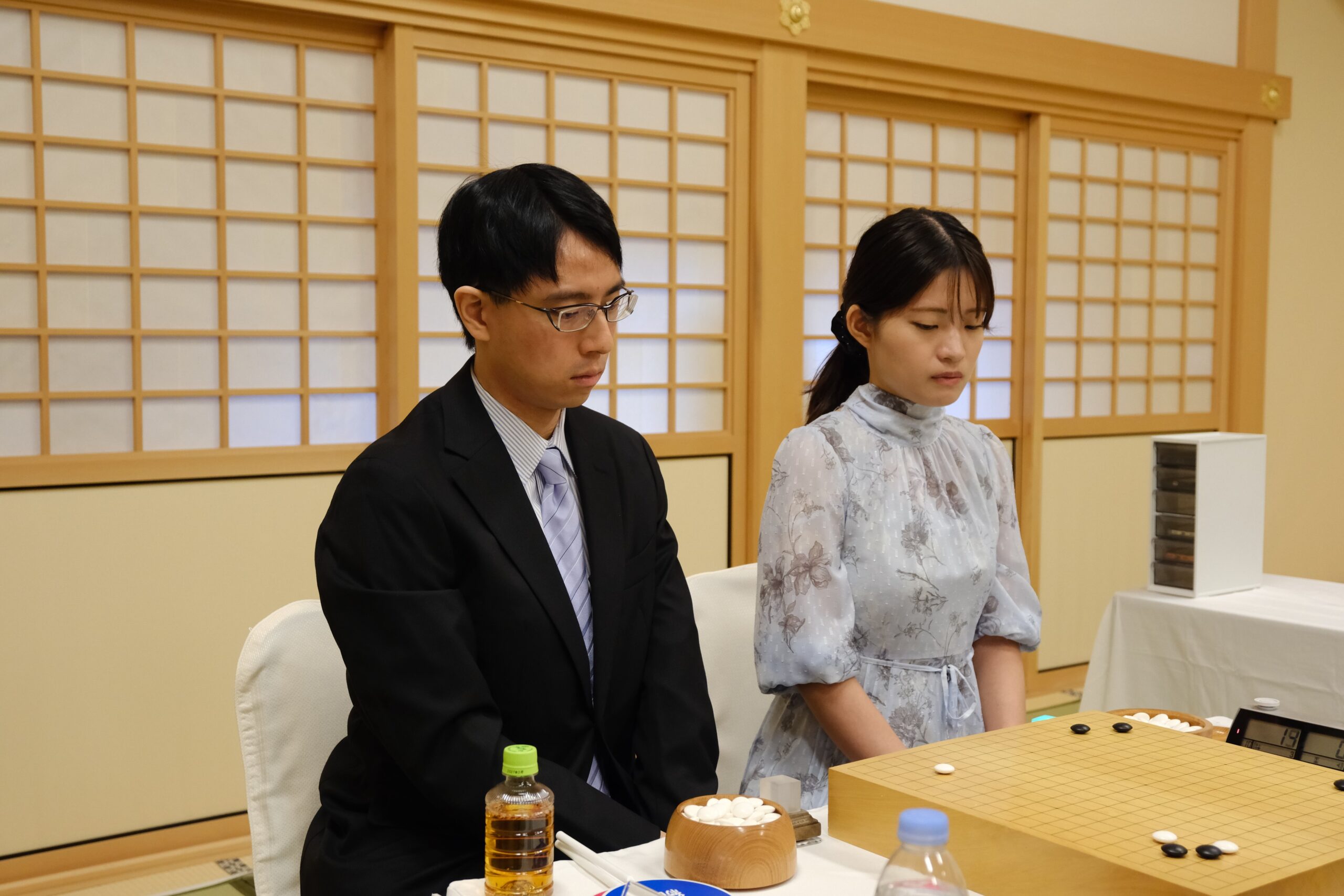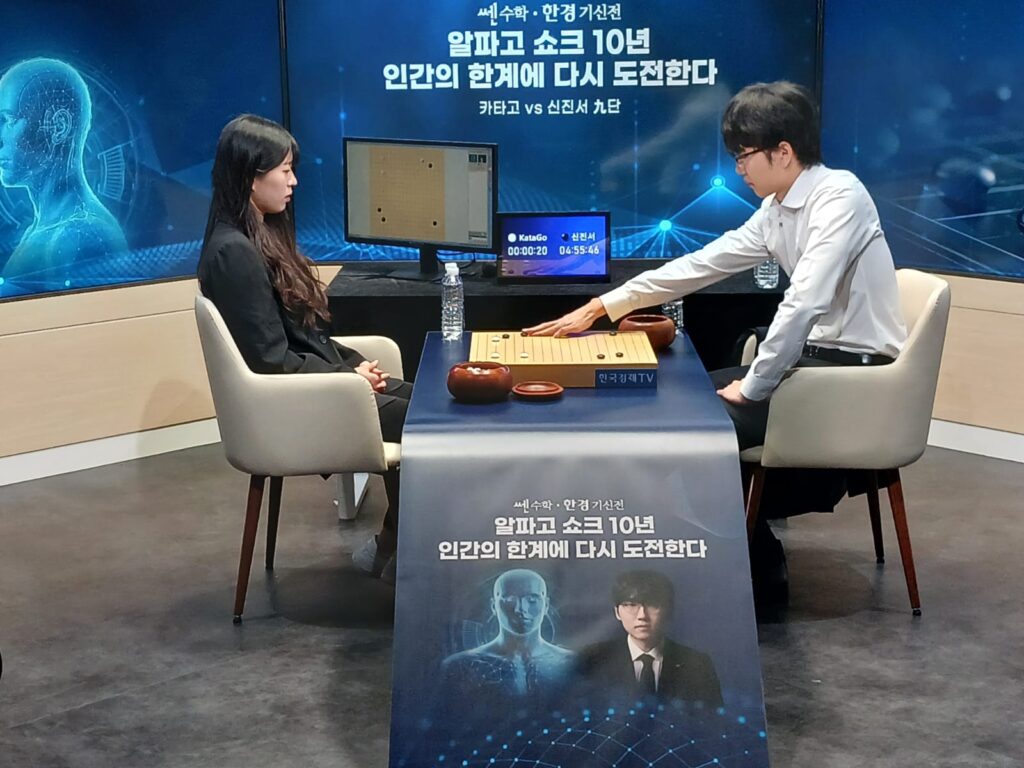

After dropping the opener, the world No. 1 won two straight — capping the series with a three-hour rout the commentators called perfect. Ten years after AlphaGo, the human walked away the winner.
It ended not with a nail-biter but with a statement. Shin Jinseo, the world’s top-ranked Go player, closed out his three-game series against the AI KataGo on July 21 in Seoul with his most dominant performance of the week: an 11.5-point victory in just over three hours, his winning probability pinned at 99% virtually from the first moves to the last. Final series score: Shin 2, KataGo 1.
Rewind five days and that scoreline looked unlikely. Shin lost Game 1 in exactly the way he had feared — lured into an open-center brawl where the machine’s calculation is untouchable. Playing with a two-stone handicap he had never converted into a win even in private practice, against an engine that studies him as thoroughly as he studies it, a sweep in the other direction seemed the safer bet. Instead, he won Game 2 with patient, simplifying Go, and then won Game 3 going away.
A masterclass in playing the opponent, not just the board
The finale’s opening turned away from the star-point patterns of the first two games toward quieter, territory-first play in the corners — a calmer battlefield that suited exactly the game Shin wanted. From there he never gave KataGo a handhold.
The most telling praise came from the broadcast booth. Park Jungsang, a former world champion commentating the match, described Shin’s play as simply perfect, and highlighted a moment that captures why: in a skirmish in the top right, Shin recognized he was taking a small local loss — and accepted it deliberately, choosing the continuation that stripped variables out of the position rather than the one that maximized points. Amateur players fight for every point; the world’s best player spent points to buy certainty, because certainty is the one currency an AI can’t out-calculate. It was the strategic lesson of the whole series compressed into a single decision.
When KataGo’s position finally collapsed into a hopeless count, the game had lasted 221 moves. The margin — 11.5 points, in a match where the komi was a mere half point — was the kind of score one expects between players separated by a full class.
What Shin won, and what it means
The tangible haul is fun to list: 150 million won in appearance fees, another 100 million in win bonuses, and — for taking two of three — a Genesis G90 luxury sedan, handed over at the award ceremony. Afterward, Shin thanked the organizers and, pointedly, the fans who kept encouraging him after the opening loss, crediting them for the two wins that followed.
The intangible result is trickier, and worth stating honestly. This was not a rematch of 2016 on equal terms; the two-stone handicap is precisely the concession that makes a human-versus-AI contest competitive at all in 2026, and no one — least of all Shin — pretends otherwise. The machines’ supremacy at even Go was settled long ago.
But grant the terms, and what happened this week is remarkable. A human player, starting from a position he had never once converted in the practice room, lost to the strongest available AI, diagnosed why, redesigned his approach in forty-eight hours, and beat the machine twice in a row — the second time crushingly. That’s not a story about raw playing strength, where the argument is over. It’s a story about adaptation, self-scouting, and nerve, the things Go has always actually been about, and the things a decade of AI dominance never took away.
Tesuji.net‘s own professional correspondent, Youngshin Lee 6P, put it best: “By Game 3, he made beating KataGo look almost easy, as if he’d finally figured it out. Even with a two-stone handicap, it was a legendary win. Shin Jin-seo showed what humans are capable of and defended our pride until the very end, giving us hope in the age of AI.”
Ten years ago, Lee Sedol’s lone win over AlphaGo was framed as humanity’s farewell victory — a last flag planted on a mountain the machines now owned. This week, that word from Lee’s verdict — hope — was everywhere, appearing in Korean headline after headline: human hope. The mountain still belongs to the machines. But it turns out we can still climb it — and every so often, with two stones and a plan, stand on top for an afternoon.