


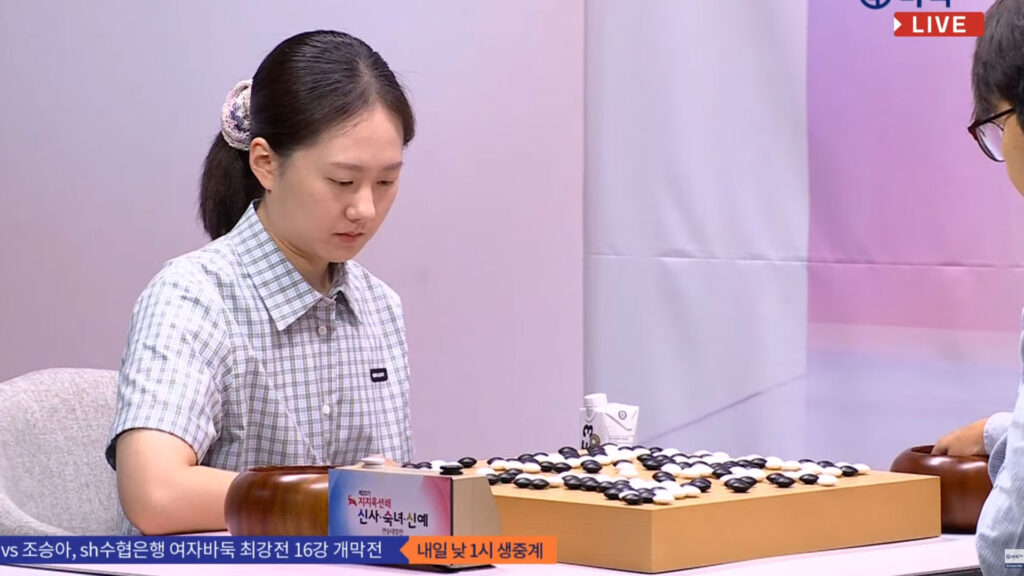
The Comeback Is On: Kim Eunji Wins Twice in Two Nights to Drag the Women’s Team Back Into the Fight
Korea’s wildest team event turned twenty by adding a third army to the battlefield, and the Women’s team fell to the brink. Then their teenage closer — author of last year’s miracle — took the board and refused to leave, felling the Rookies’ hottest player and last year’s final foe back-to-back.
Every Go country has its beloved formats, but Korea’s GG Auction Cup might be the most purely entertaining tournament in the professional world. For nineteen years it staged a simple, delicious premise: a team of women professionals against a team of senior men (40 and over), playing win-and-continue — the winner of each game stays at the board and takes on the next challenger, until one team runs entirely out of players.
For its 20th anniversary this year, the organizers threw a third army into the war. Alongside the Seniors and the Women, a new Rookies team of players aged 20 and under joined the fray, transforming the event into a three-way relay brawl — the same format as the famous Nongshim Cup between Korea, China, and Japan, except here the three nations are generations. Ten players per team, one long battle royale running through the summer, with streak bonuses stacking up for anyone who can string wins together.
Twenty-two games in, the new format has delivered everything it promised — except good news for the Women’s team.
The state of the war
The scoreboard now reads: Seniors 9 wins, Rookies 8, Women 7. In a format where the goal is to be the last team with players remaining, the Seniors and the Rookies are each down to two players — and the Women survive on their final pair.
The summer’s storylines have come from everywhere. Early on, rookie Yun Seowon ripped off four straight wins, including a half-point heart-stopper against the legendary Yu Changhyuk. Then the Seniors answered with a rampage from Baek Hongseok, who cut down five consecutive opponents — among them Nakamura Sumire, the Japanese-born star now playing in Korea — before rookie Han Juyeong finally stopped him in Game 22, earning the right to hold the board and await the Women’s next runner.
That runner was Kim Eunji — and what followed was a two-night counterattack. On August 3, in Game 23, she ended Han Juyeong’s run and stopped the bleeding. The following evening she came back out for Game 24 and did something loaded with history: she took down Mok Jinseok — the very man she defeated in last year’s winner-take-all final game — winning as White by resignation at move 240 and eliminating him from the tournament. (Results confirmed via the Baduk TV broadcasts and the official game records; as we publish) Two games, two eliminations: the Rookies’ in-form finisher and the Seniors’ most storied survivor are both gone, and — crucially, under win-and-continue rules — Kim still sits at the board, now on a two-game streak. Even the casualty list is star-studded: Lee Changho, arguably the greatest player in history and the hero of last year’s edition with an opening seven-game streak, was eliminated this time without a single win to his name.
The Rookies, incidentally, are not to be taken lightly on names alone: their surviving pair is Kim Seunggu and Kim Seungjin — the champion and third-place finisher from June’s Globis Cup, the under-22 world championship in Tokyo.
And yet, if you asked a Korean Go fan whether the Women’s team is finished, you’d get a knowing smile. Because look at who’s left.
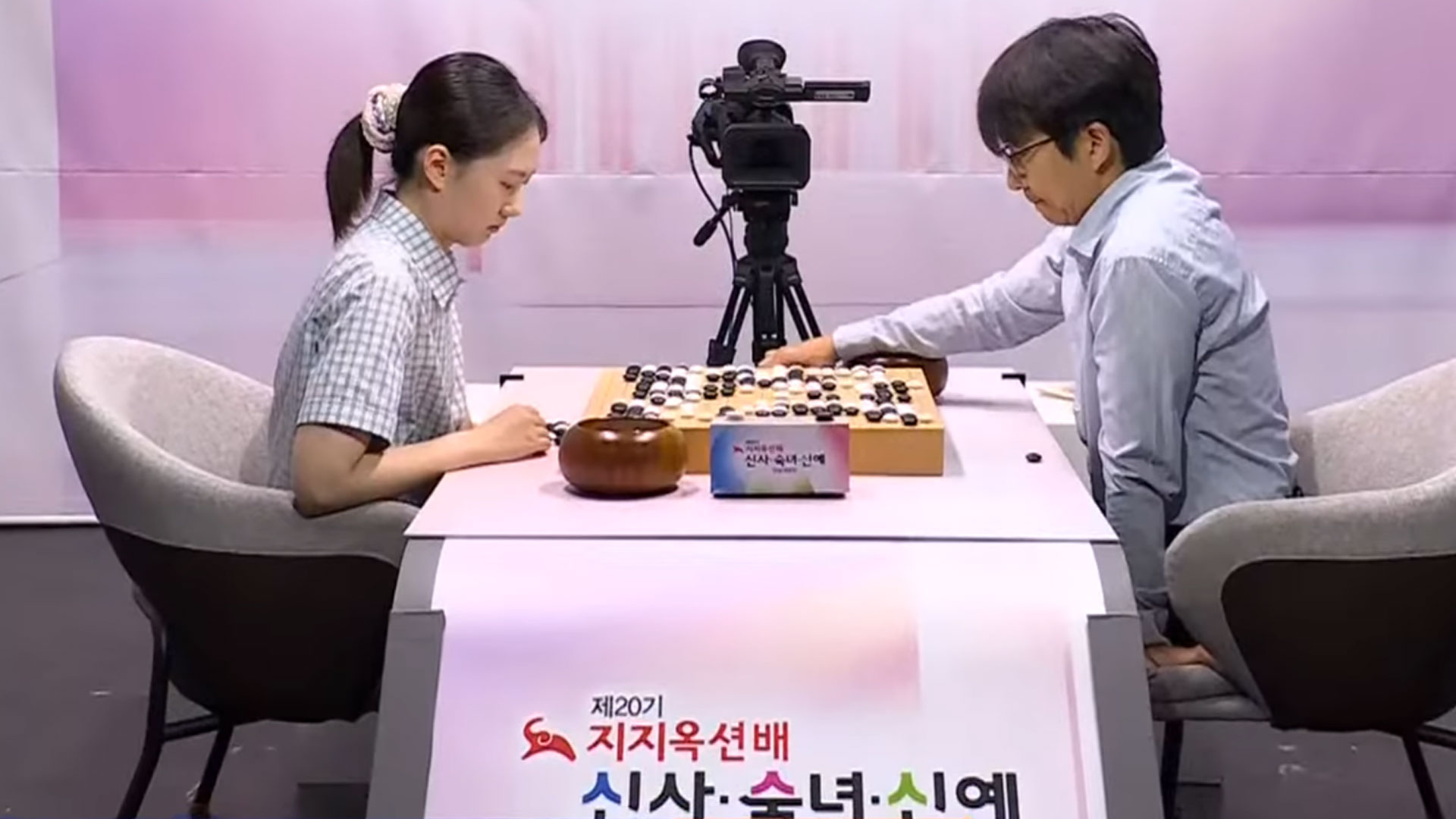

The closer
The Women’s last two players are Choi Jeong and Kim Eunji — which is to say, the reigning queen of women’s Go and the 18-year-old world champion who has spent two years trying to take her crown. Between them they hold essentially every women’s title that matters. And one of them has been in exactly this position before.
Last year, in the 19th edition, the Women’s team was on the brink when Kim Eunji stepped in as the final player. What followed became instant tournament legend: three straight wins over senior stalwarts, capped by a victory over the Seniors’ own closer, Mok Jinseok, in the winner-take-all final game — a 12–11 comeback that snapped a three-year drought and delivered the trophy. Afterward, a delighted Kim called it her first team title and promised to come back and win plenty more.
Now the script has nearly reset itself — and begun to rhyme. The team is trailing. The bench is down to a single teammate — though what a teammate: Choi Jeong is nobody’s supporting cast. And Mok Jinseok, the final boss of last year’s drama, has already fallen to her a second time. Kim Eunji — seeded into this event as the highest-ranked player in the entire 30-player field — once again carries the weight in the closing games.
The difference is that this year there are two armies to outlast, not one. Five wins behind the front-runner is a brutal deficit even for a closer of her caliber, and the Rookies’ young guns are precisely the kind of opponents who fear no reputation.
The arithmetic of survival remains brutal, but it is finally moving in the right direction. A team is eliminated when its last player falls, and the tournament is won by eliminating everyone else. Kim Eunji and Choi Jeong must, between the two of them, take down the four remaining opponents — two Seniors and two Rookies — while still affording only one more defeat. The difference now is momentum: Kim holds the board on a two-game streak, one win away from the tournament’s streak bonuses, and every game she takes is one the team never has to ask of anyone else.
Which is, of course, exactly why nobody in Korea is changing the channel. Last year she closed with three straight wins to steal the title in the final game; this year the mountain was higher — six opponents to fell with almost no margin for error — and she has already cut down two of them. If the Women’s team completes a second consecutive miracle from here, it will be the greatest escape in the tournament’s twenty-year history. And it is now, unmistakably, underway.

