


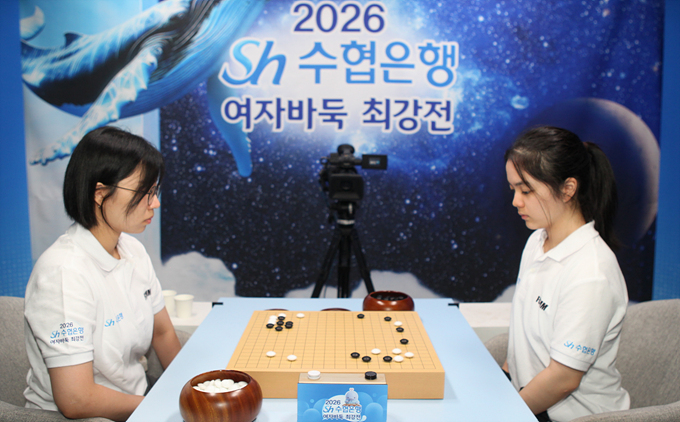
The Japanese prodigy who left home to play in Korea has climbed to third in her adopted country’s women’s rankings — and just ended a six-game losing streak against the best woman player in the world.
Korean Go coverage counted it to the day. One year, nine months and fourteen days since Nakamura Sumire last beat Choi Jeong, and six consecutive defeats in between. On September 17, at the Baduk TV studio in Seoul, she ended it — taking Black in the quarterfinal of the Suhyup Bank Women’s Choegangjeon and forcing Choi’s resignation after 233 moves.
Beating Choi Jeong is not a routine achievement for anyone. She has been the dominant force in women’s Go for a decade, and Sumire’s record against her stood at one win and nine losses going in. The single win had come in December 2024, in the opening game of a Women’s Kisei final she went on to lose.
This one followed a pattern she will recognise from the wrong side. Sumire took the initiative early, striking at a weak point in Choi’s left-centre position. Choi steadied herself, settled her right-centre group, and the game flattened into a long exchange with neither player able to break clear. Then a fight on the left side went Sumire’s way heading into the endgame, and she held the lead to the finish. Afterwards she was typically hard on herself — she thought she was fine early, felt she had played strangely while attacking in the middle game, and only near the end of the endgame concluded she had something left over.
Asked how she had prepared, given the head-to-head record, she said that because she had been losing in strange ways, her goal this time was simply to play good content.

The gamble, two and a half years on
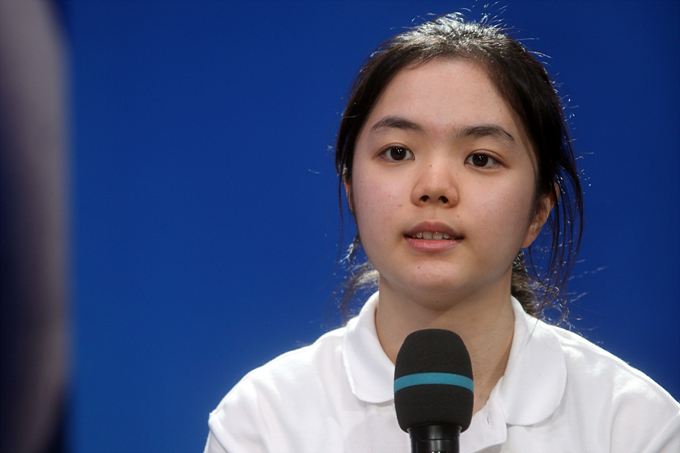
To understand why this result carries weight beyond one tournament, you have to remember what Sumire gave up.
She was Japan’s most famous Go prodigy — the youngest professional in the Nihon Ki-in’s history, admitted at ten under a special provision for exceptional talent, a genuine national story with television cameras at her debut. In 2024 she left. Not the game, but the country: she applied to become a guest player at the Korea Baduk Association and moved to Seoul to compete in the Korean system, the deepest and most punishing in the world. The Nihon Ki-in supported the decision, but it was still a teenager walking away from being a star in her home country to become a newcomer somewhere harder.
The early results did not obviously vindicate it. She spent her first Korean season losing to players well outside the elite, and some of the more optimistic Japanese framing of her strength did not survive contact with the Korean circuit.
Then it started working. She won the Hyorim Cup in 2025 and a Tengen title in 2026. She was picked as the wildcard for the inaugural Shinhan Kiseon. She now speaks Korean well enough that Korean fans remark on it. And in August she reached third in Korea’s women’s rankings — the highest she has been since the move — a position she held into September. There are exactly two players above her: Kim Eunji and Choi Jeong. She has now beaten one of them.
What’s next
The tournament she is in is brand new, with 75 entrants cut to a main draw of thirteen, single elimination through the semifinals, and a best-of-five to crown the first champion. First prize is 100 million won.
Her semifinal is against Oh Yujin, against whom she trails 2–3. She was characteristically blunt about it: she remembers losing easily to Oh, and intends to prepare better this time.
Whatever happens there, the more interesting number is the ranking. When a Japanese player left for Korea in 2024, the question everyone asked was whether she would sink. Two and a half years later she is the third-best woman player in the country that produces the best women players in the world, and the two ahead of her are the two best on the planet. That is not a sinking. That is a decision that worked.

