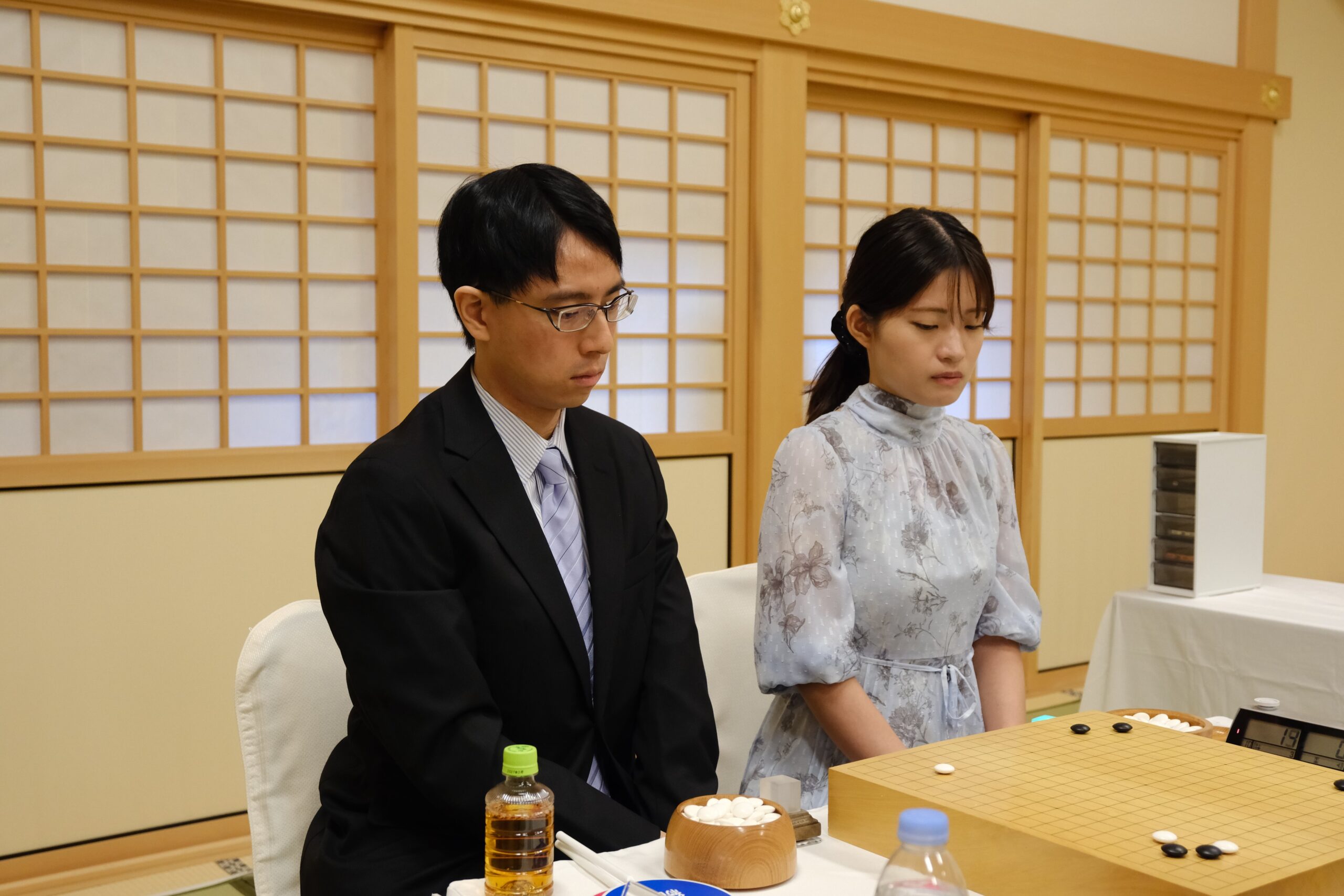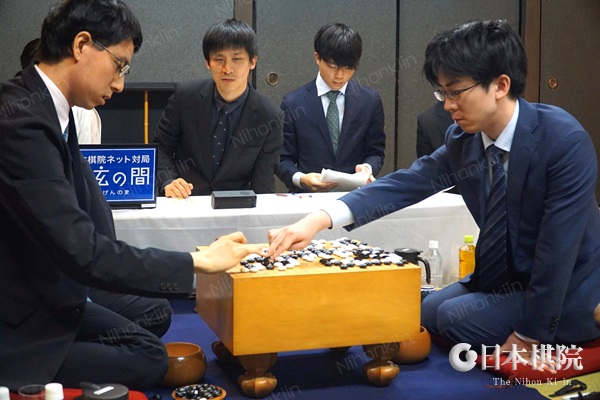

China’s Yang Dingxin tore through three opponents in Beijing before Byun Sangil stopped him. Korea, chasing a seventh straight title, heads to Busan with its heavy artillery untouched.
There are bigger prize funds in professional Go, but there is nothing quite like the Nongshim Cup. Since 1999 it has put Korea, China and Japan in the same room with five players each and a single rule that makes it unlike any individual tournament: win, and you stay at the board. Lose, and you are gone for good, and your country is one player closer to having nobody left. Korean fans call it the Three Kingdoms of the board, and the name fits — one player on a hot streak can dismantle an entire nation’s team, and the pressure on whoever has to stop him is unlike anything in a normal title match.
The tournament also carries a particular kind of history. Lee Changho was so reliably the man who ended other countries’ runs that he was nicknamed the competition’s guardian deity, and his career record here stood as the benchmark for two decades. Korea has won the thing fourteen times to China’s eight and Japan’s one, and has taken the last six in a row. This year it is chasing a seventh consecutive title, which nobody has ever managed.
The 28th edition opened in Beijing on September 8, the first time the event has been held there since 2023, and the first round finished on the 12th. Here is where things stand.
Yang Dingxin’s rampage
Korea drew a bye for the opening game, which meant China and Japan went first — and China sent out Yang Dingxin, a choice that raised eyebrows. Leadoff duty usually goes to a team’s most expendable player, since the format punishes an early loss. Sending a top-tier player first signals intent, and Yang justified it immediately.
He beat Japan’s Fukuoka Kotaro in the opener, taking Black and forcing resignation after 229 moves. The game turned on Fukuoka’s 118th move; by move 139 Yang had captured his central group and the rest was administration. It was a rough evening for the 20-year-old, who has spent 2026 winning the Honinbo and reaching the Oza challenge at home, and who now becomes the first player eliminated from this tournament.
Yang then took out Korea’s leadoff man An Seongjun, who pushed too hard on the upper side early and spent the rest of the game chasing. Then he beat Japan’s Yu Zhengqi, again with Black, again by resignation, this time in 197 moves. Three wins, a ten-million-won streak bonus, and a Nongshim career record of 10–2 for a player who once won seven in a row in a single edition — a share of the all-time record.
Byun Sangil ends it
Korea’s answer was its wildcard pick. Byun Sangil came in for Game 4 on September 12 and beat Yang as White by resignation at 198 moves, in a game he controlled from early on — his move 116, which crushed a key black stone, effectively ended it. Afterwards he said he had not felt certain until Yang actually resigned, which is the kind of thing players say when they have won comfortably and do not want to say so.
It was his first win in this competition, and it extended his head-to-head record over Yang to 7–2. It also stopped China’s momentum at exactly the point where it was becoming dangerous.
Where it stands, and what’s coming
Korea leaves Beijing with four players: Byun holding the board, plus Shin Jinseo, Park Junghwan and Shin Minjun. China also has four — Wang Xinghao, Dang Yifei, Tu Xiaoyu and Liao Yuanhe. Japan has three, having lost both Fukuoka and Yu Zhengqi, and now relies on Ichiriki Ryo, Iyama Yuta and Shibano Toramaru.
Play resumes in Busan on November 27, and the draw has been unkind to Byun: his next opponent is Iyama Yuta, the man he specifically named afterwards as someone he has lost to too often in important games. Their record is 2–2.
And Korea still has not needed Shin Jinseo. The world number one has won twenty-one consecutive games in this competition across several editions — a record that is still running because nobody has beaten him in it. He told reporters before the tournament that the format suits him. Nothing in the last two months of Korean Go has looked particularly encouraging, but as long as that man is sitting in reserve, the sixth-place team in a qualifier is not the whole story.